
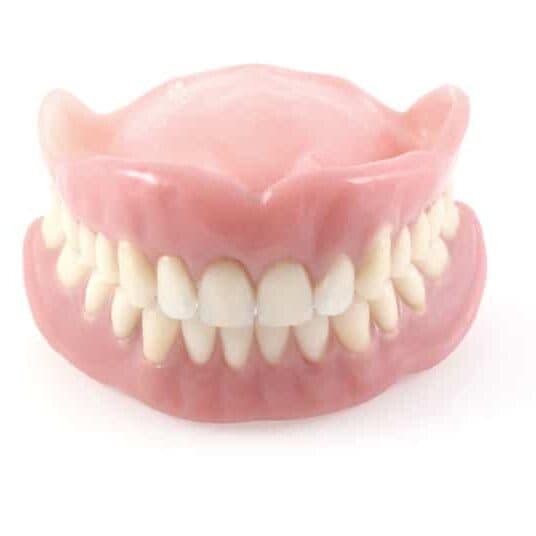
Replace Missing Teeth With Clear Expectations
Dentures can give you a complete-looking smile when several or all teeth are missing. They can support your lips and cheeks, help with speech, and let you eat more comfortably than you could without replacing your teeth. For many patients, they are also the most accessible way to restore an entire smile.
It is important to understand what dentures can—and cannot—do. A removable denture is a smile replacement, not an apples-to-apples functional replacement for natural teeth. It rests on the gums rather than functioning like teeth anchored in the jaw. You will need to learn how to speak and eat with it, and the road to comfort and confidence can take patience.
Some patients adapt quickly and do very well. Others need more time, follow-up adjustments, and denture adhesive for added security. Our team will explain those realities before treatment so you can choose a tooth-replacement plan with realistic expectations.
Full Dentures
Full dentures replace all teeth in an upper or lower arch. They are removable and shaped to rest over the gums. A careful fit supports appearance and comfort, but even a well-made denture can move during chewing or speaking and may need adhesive to feel more secure.
Partial Dentures
A partial denture fills spaces when some healthy natural teeth remain. It uses a framework or other attachments for support and helps keep neighboring teeth from drifting into open spaces. Because it receives support from remaining teeth, it may feel more stable than a full removable denture.
Implant-Supported Dentures
Dental implants can anchor a denture and reduce the movement patients often notice with a traditional removable appliance. Depending on the plan, the denture may remain removable for cleaning or attach more securely to the implants. An implant evaluation, including a CBCT scan to measure available bone, helps determine whether this approach fits your health and goals.
All-on-4
All-on-4 is a fixed full-arch option that attaches a complete set of replacement teeth to strategically placed implants. It does not come out at night and does not cover the roof of the mouth. For patients who want greater stability and function than a traditional denture can offer, it may be the better long-term direction.
Dentures or Dental Implants?
Traditional dentures remain a useful option, especially when budget, health, healing time, or personal preference makes implant treatment less practical. They can restore the appearance of your smile without implant surgery and can replace many teeth with one appliance.
Dental implants are often the more stable and effective treatment when a patient is a candidate. Because implants are supported by the jaw rather than resting only on the gums, they can reduce slipping, improve confidence while eating and speaking, and provide a more secure foundation for replacement teeth. They also avoid relying entirely on suction or adhesive for stability.
The right answer is not the same for everyone. Our team will compare:
- How much stability and chewing function you want
- Whether you prefer a removable or fixed restoration
- The health and available bone in your jaw
- Healing time and treatment stages
- Cleaning and long-term maintenance
- Upfront cost and long-term value
If implants make clinical and practical sense, we will explain why they may serve you better. If a traditional denture is the right fit, we will help you approach it with honest expectations and a plan for adapting.
What Dentures Can Restore
A well-planned denture can help you:
- Rebuild the appearance of a complete smile
- Restore support for your lips and cheeks
- Speak more clearly after an adjustment and practice period
- Chew a broader range of foods than you could with extensive missing teeth
- Protect remaining teeth from unwanted movement with a partial denture
- Move away from a damaged or uncomfortable old appliance
Dentures do not feel or function exactly like natural teeth. Their success depends on fit, oral anatomy, practice, follow-up care, and your ability to adapt. We make adjustments and coach you through the transition, but we do not promise that a removable denture will perform like natural teeth or an implant-supported restoration.
What Makes a Denture Look Natural and Fit Well
A denture is built from details: a base that follows the shape of your gums closely, teeth sized and shaded to suit your face, a bite that meets evenly, and enough support for your lips and cheeks without looking bulky. Small differences in tooth position change how you look when you speak and smile, which is why we take time with records rather than rushing to delivery.
A careful fit improves comfort, but fit alone cannot eliminate every limitation of a removable appliance. Gums and jaw shape change over time, and saliva, muscle control, and the shape of the ridge all affect stability. Some patients use denture adhesive even when the appliance fits as intended.
The Try-In Appointment
Before a denture is finished, you attend a try-in appointment with the teeth set in wax. You can see the shape, color, and arrangement, check how the teeth show when you talk, and tell us what you want changed. Adjustments at this stage are simple; after final processing they are more limited.
Immediate and Temporary Dentures
If teeth still need to be removed, an immediate denture can be made ahead of time and placed the same day as the extractions so you are not without a smile. Because gums change shape as they heal, an immediate denture usually needs relines and may eventually be replaced with a final denture once healing is complete. We explain that sequence so it is not a surprise.
Why Choose BlueDot Dental?
Compare Every Level of Tooth Replacement
BlueDot provides traditional dentures, implant-supported dentures, dental implants, and All-on-4. You can compare removable and fixed paths in one place and understand the differences in stability, function, cleaning, timeline, and long-term cost before deciding.
Honest Guidance, Not False Promises
We want you to feel good about your decision after the denture is delivered—not just on the day you say yes. Our team explains the learning period, possible need for adhesive, follow-up adjustments, and functional limits of a removable denture. When implants offer a stronger solution for your goals, we will discuss them clearly.
Support Through the Adjustment Period
New dentures often require more than one adjustment. We check pressure spots, fit, bite, and the concerns you notice while eating or talking. Those follow-up visits help your mouth adapt and give us a chance to correct issues early.
Financial Options
Dentures can be a more accessible way to replace many missing teeth. BlueDot accepts most major dental insurance plans and offers financing and an in-house Dental Loyalty Program. Coverage varies, but our team can help you review available options for both dentures and implant treatment.
What to Expect
Evaluation
Our team examines your gums, remaining teeth, bite, jaw support, and current appliance if you have one. We discuss what you want to improve and whether stability, appearance, cost, or treatment time matters most to you.
Compare Designs
We explain full, partial, implant-supported, and fixed full-arch options that fit your condition. You can compare their benefits, limitations, care requirements, treatment stages, and expected cost.
Records and Fitting
Detailed records are used to plan the shape and fit of the denture. Try-in and adjustment steps help refine appearance and bite before or after delivery, depending on the design.
Learning to Eat and Speak
Using a removable denture is a learned skill. You may begin with softer foods, smaller bites, and chewing on both sides at the same time. Reading aloud can help your tongue and facial muscles adjust to the new tooth positions. Improvement is usually gradual rather than immediate.
Adhesive and Follow-Up Care
Many denture wearers use adhesive to reduce movement and feel more secure. We can show you how much to use and how to remove it safely. Adhesive should not be used to hide a painful or poorly fitting denture; persistent looseness or sore spots need an evaluation.
Over time, changes in your gums and jaw may require relining, repair, or replacement. Our denture post-op care instructions cover the first days at home.
Questions, Answered
Denture FAQs
Will Dentures Look Natural?
Modern dentures are designed around tooth shape, color, arrangement, and facial support. We aim for a balanced smile that suits you, while setting realistic expectations about how a removable appliance will feel and function.
Can I Eat Normally With Dentures?
Dentures can help you eat more comfortably than leaving multiple teeth unreplaced, but they do not restore the same chewing ability as healthy natural teeth. You will need time, practice, and changes in how you bite and chew. Implant support may provide greater stability and function for appropriate patients.
Will I Need Denture Adhesive?
Possibly. Many patients use adhesive for added confidence and stability, even with a properly made denture. We will explain how to use it correctly. If your denture becomes painful, suddenly loose, or dependent on increasing amounts of adhesive, schedule an evaluation rather than trying to compensate at home.
How Long Does It Take to Adjust?
Every patient adapts differently. Some become comfortable relatively quickly, while others need a longer learning period and several adjustments. Your oral anatomy, muscle control, saliva, prior denture experience, and the type of appliance all affect the process.
How Do I Clean My Dentures?
Remove and clean them as directed using products made for dentures. Keep them safe over a folded towel or basin of water, and clean your gums and any remaining teeth daily.
Should I Sleep in My Dentures?
Many patients are advised to remove dentures at night so oral tissues can rest, but follow the instructions for your specific appliance.
Can a Broken Denture Be Repaired?
Often, but the right repair depends on the damage and fit. Call us promptly and do not use household glue, which can harm the material and your mouth.
Are Implants Better Than Dentures?
For many qualified patients who prioritize stability and function, dental implants can provide a more secure result than a traditional removable denture. They require an appropriate health evaluation, additional treatment stages, healing, and a different investment. We will help you compare both choices and recommend the option that best fits your needs.
How Long Do Dentures Last?
Many dentures serve well for several years, but the jaw and gums change over time, so fit rarely stays perfect indefinitely. Regular checkups let us catch looseness early and reline the denture before sore spots develop. Wear, breakage, or major changes in your mouth are common reasons for replacement.